
2 MIL NUEVOS CONCORDIENSES RECIBIERON LA VACUNA CONTRA EL COVID-19
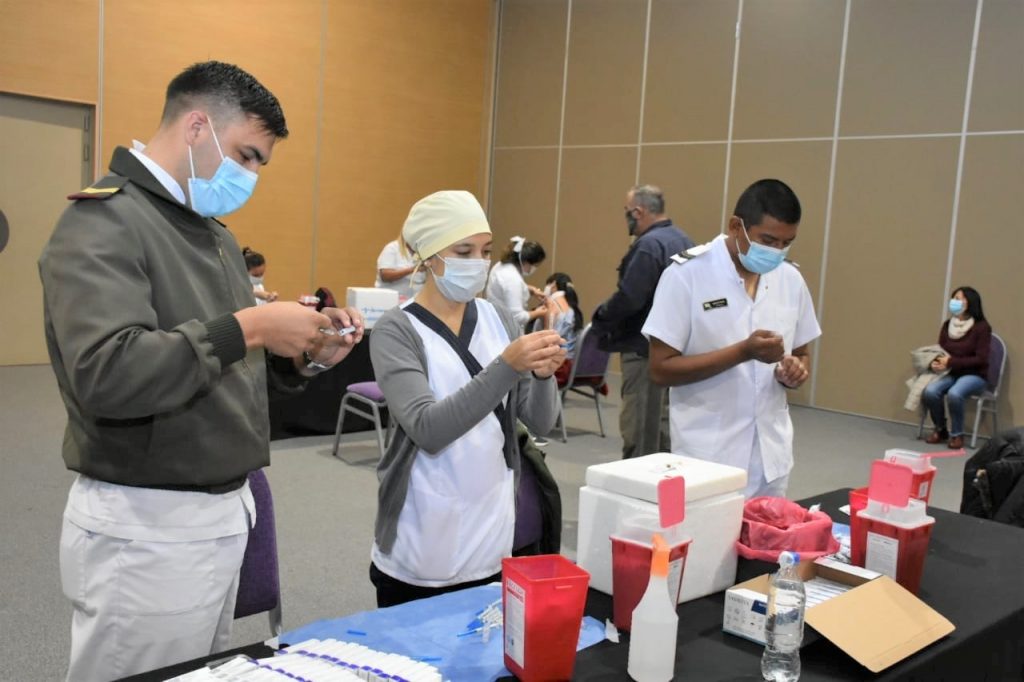
Este miércoles el intendente Alfredo Francolini junto al Comité Operativo de Emergencia Sanitaria local, supervisaron la realización de una nueva jornada de vacunación en el Centro de Convenciones en la que se aplicaron 2000 primeras dosis de Sputnik V a personas entre 18 y 59 años con factores de riesgo, y a mayores de 60 que no se habían inscripto con anterioridad.
“Celebramos un día más de vacunación, sobre todo por la situación que se está viviendo en la ciudad donde los casos vienen aumentando diariamente de forma preocupante”, señaló el Presidente Municipal. “La vacunación para nosotros es otra manera más de prevención así como las tantas que venimos recomendando hace más de un año, principalmente el uso de barbijo, la higienización de manos y mantener la distancia”, dijo Francolini.
“Como dijo el Intendente estas jornadas de vacunación ayudan a mitigar el efecto de la pandemia. No tenemos que descuidar los cuidados personales que tenemos que tener para tratar de pasar el invierno de la mejor manera posible y no tener que tomar nuevas acciones con respecto a restringir la circulación en la ciudad, que es a lo que no queremos llegar”, dijo por su parte el secretario de Salud de la Municipalidad, Dr. Mauro García.
Sobre el operativo de vacunación el profesional de la salud resaltó: “Logramos un buen grupo de trabajo entre lo que es el grupo de Salud de Provincia, de los hospitales, el grupo de Salud del Municipio y las demás instituciones que nos acompañan siempre. Nosotros apostamos a este trabajo articulado. Lo importante además de la aplicación de la vacuna es la contención que se le da a la gente que viene. Nos pone muy contento”.
Ante el avance de la segunda ola, García reiteró que “le pedimos encarecidamente a la población que no se olviden de seguir cuidándose, evitar reuniones innecesarias en lugares cerrados, no ventilados y sin protección personal, tampoco compartan elementos personales, ahí es donde está el foco de los contagios”.
SENSACIÓN DE ALEGRÍA POR RECIBIR LA PRIMERA DOSIS
Rubén fue una de las personas que recibió la dosis de vacuna Sputnik V este miércoles y en este contexto demostró su alegría. “Llegó el día tan esperado. Realmente me encontré con una atención espectacular, la gente de salud muy amable y es una tranquilidad que uno necesita tener”, dijo el hombre.
“Es una sensación de alegría la que tengo”, destacó Pedro quien se vacunó junto a su mujer Marta quien dijo que “esto es una tranquilidad. Profundamente quiero agradecer a los trabajadores de salud y al Intendente, la atención fue excelente, muy buena predisposición desde que entramos hasta que salimos”.
Por último, es importante recordar que quien no se anotó puede hacerlo ingresando a www.entrerios.gov.ar/vacunate , para así ser citado dentro del Plan Rector de Vacunación. Si ya se inscribió y aún no fue llamado, sólo debe aguardar que a medida que llegan nuevas dosis a la Provincia, se ponen en marcha nuevos operativos de vacunación.




Another official is the sergeant at arms who, as the Senate’s chief law enforcement
officer, maintains order and security on the Senate premises.
The Senate’s chief administrative officer is the secretary of the
Senate, who maintains public records, disburses salaries, monitors the acquisition of stationery and supplies, and oversees clerks.
The powers of the presiding officer of the Senate are far less extensive than those of the speaker of
the House. They may vote in the Senate (ex officio, for they are
not an elected member of the Senate) in the case of a tie, but are not required to.
Historically, cloture has rarely been invoked because bipartisan support is
usually necessary to obtain the required supermajority, so
a bill that already has bipartisan support is rarely subject
to threats of filibuster. In the 1970s, the vote requirement for cloture was lowered
and a new process of scheduling Senate business was instituted, in turn ending
the “talking filibuster”. Filibuster efforts continued
until 1917, when in response to a filibuster during World War I,
President Woodrow Wilson demanded there be an ability
to force a Senate vote. The national bank bill
did pass, but Calhoun, and other Southern senators, continued using
this tactic. The filibuster is a tactic used to defeat bills and motions
by prolonging debate indefinitely. In most cases, senators do not refer to each other
by name, but by state or position, using forms such as “the senior senator from Virginia”,
“the gentleman from California”, or “my distinguished friend the chairman of the Judiciary Committee”.
Nevertheless, presidents have frequently used recess appointments to
circumvent the possibility that the Senate may reject the nominee.
Typically, a nominee is the first subject to a hearing before a Senate committee.
Officials whose appointments require the Senate’s approval include members of the Cabinet,
heads of most federal executive agencies, ambassadors, justices of the Supreme
Court, and other federal judges. The president can make certain appointments only with the advice and consent
of the Senate.
References:
https://blackcoin.co/2025-best-league-players/
online casinos that accept paypal
References:
https://jobsathealthcare.com/
online real casino paypal
References:
saek-kerkiras.edu.gr